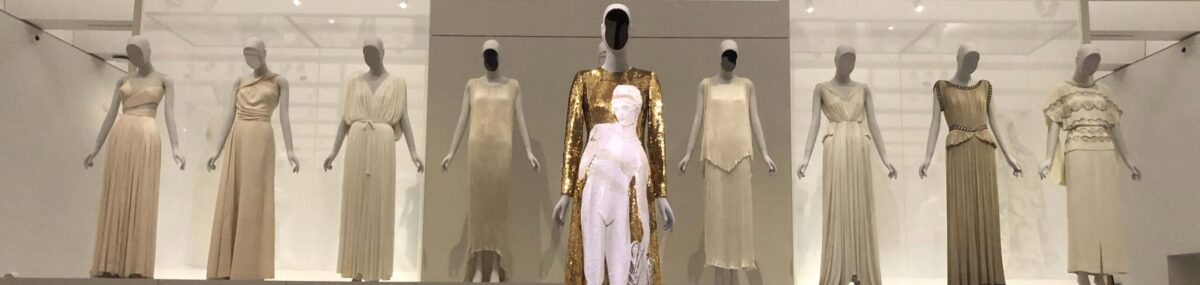
Cover image by the author.
In advance of my visit to the Met this past weekend, someone asked me about the theme of Costume Art, this year’s Costume Institute exhibition and the primary reason for my visit. Despite having read the blurb on the website, I could only say “it has both art and fashion”. In retrospect, this was a sign of things to come, because I can’t explain it much better now. While the fashion on display was pretty cool, I found the ideas behind the exhibition to be fairly unoriginal, while the texts that narrated them were unfortunately convoluted. In short, this show really didn’t do it for me.
Themes
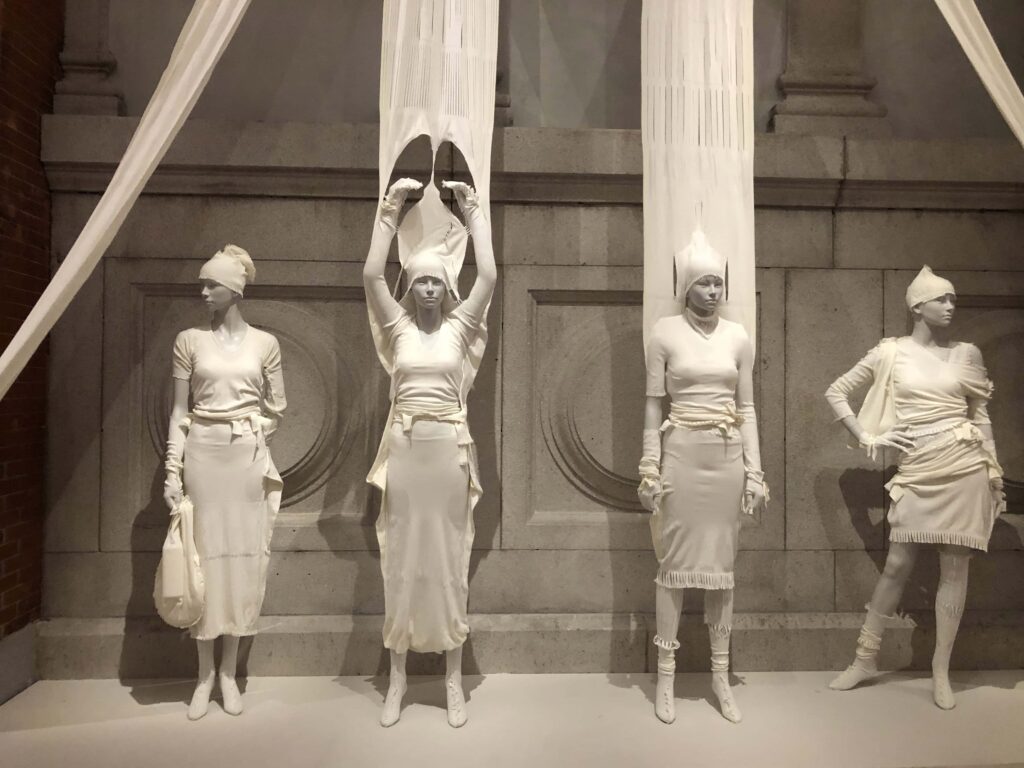
If I had to summarize the main idea of Costume Art, I would say it’s that fashion is closely related to the human body, which is not exactly a unique thought. Different sections focus on aspects of either the physical interaction of clothing with the body or the aesthetic expression of body-related ideas. Examples include nudity, the classical silhouette, shape-altering devices like corsets, corpulence, physical disability, skin, and internal bodily systems.
Each section pairs clothing, mainly contemporary high fashion alongside some historical pieces, with artworks ostensibly relating to similar ideas. For example, a row of beautiful, Greek-inspired gowns is juxtaposed with a row of ancient Greek vases showing women wearing similar garments. Some of the pairings are genuinely illuminating; I particularly liked the use of ancient female figurines to illustrate the body types that have been celebrated in the past, while the selection of prints parodying the exaggerated silhouette of bustles was simply a lot of fun. But more often than not, I found the connections to be either fairly mundane (for example, the dress and the adjacent artwork both relate to the circulatory system) or stretching credibility. Judging by the chatter overheard in the galleries, I was not the only person struggling to find the connections between some of these objects.
In fact, I felt like most of the show’s core concepts could have been conveyed just as well without the artworks or with fewer of them. Moreover, I believe that the combination of fashion and art also suffers from a problem of scale, with human-sized clothing overpowering the abundance of small prints and statuettes.
This is unfortunate, because I have usually enjoyed exhibitions that combine art and fashion, especially Heavenly Bodies (2018) and Solid Gold (2025). In both those cases, the shows were much more focused, making them more cohesive and easier to follow. Heavenly Bodies dealt specifically with fashion inspired by medieval Christian art, while Solid Gold was broad in scope but limited itself to objects related to gold as a metal/color/idea. By contrast, Costume Art‘s theme of fashion and art relating to the human body was so incredibly broad that issues were probably inevitable.
The texts
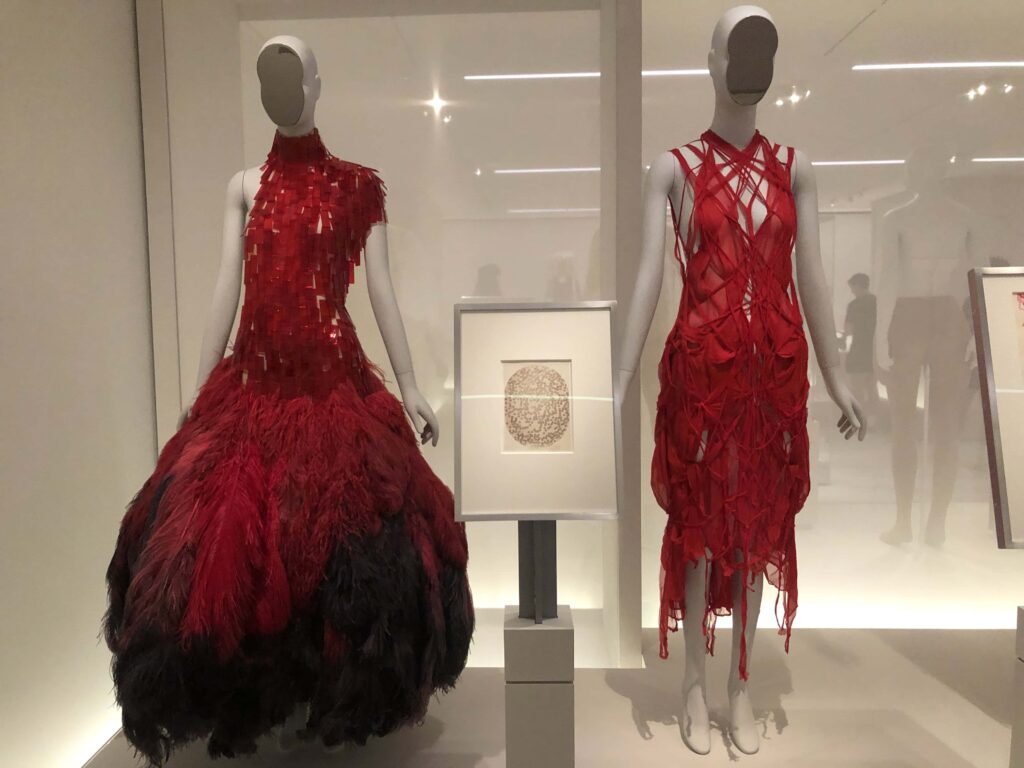
There is a real possibility that I’m missing something here – that the show is actually much more interesting and original than I’m giving it credit for. But I wouldn’t really know, because both the object labels and other text panels are so opaque that I struggled to derive meaning from them. This was by far my biggest problem with the show, and it alienated me off from the very beginning.
In fact, these text panels were prime examples of International Art English, the complex and convoluted prose often used to talk about contemporary art. This way of writing is opaque by intention, so it’s not a style you use when being understood is your primary aim. That’s exactly the opposite of art museums’ missions of making art accessible to broad audiences, which is why you don’t typically see it used in museum contexts. It’s particularly counterproductive here, since shows that include lots of visually and historically disparate objects must by nature rely heavily on the texts to hold them together.
Honestly, I cannot figure out why they would do this, since I have never observed it in a Met exhibition before. Perhaps the inflated prose was meant to distract from weak or under developed ideas, or maybe using such art speak was intended to elevate fashion to the level of the contemporary art it usually aggrandizes. Regardless of the reason, the outcome is not great. Even I struggled to understand what was being said, and since the exhibition already wasn’t doing much for me, I wasn’t sufficiently motivated to continue sorting through it as the show progressed.
Verdict
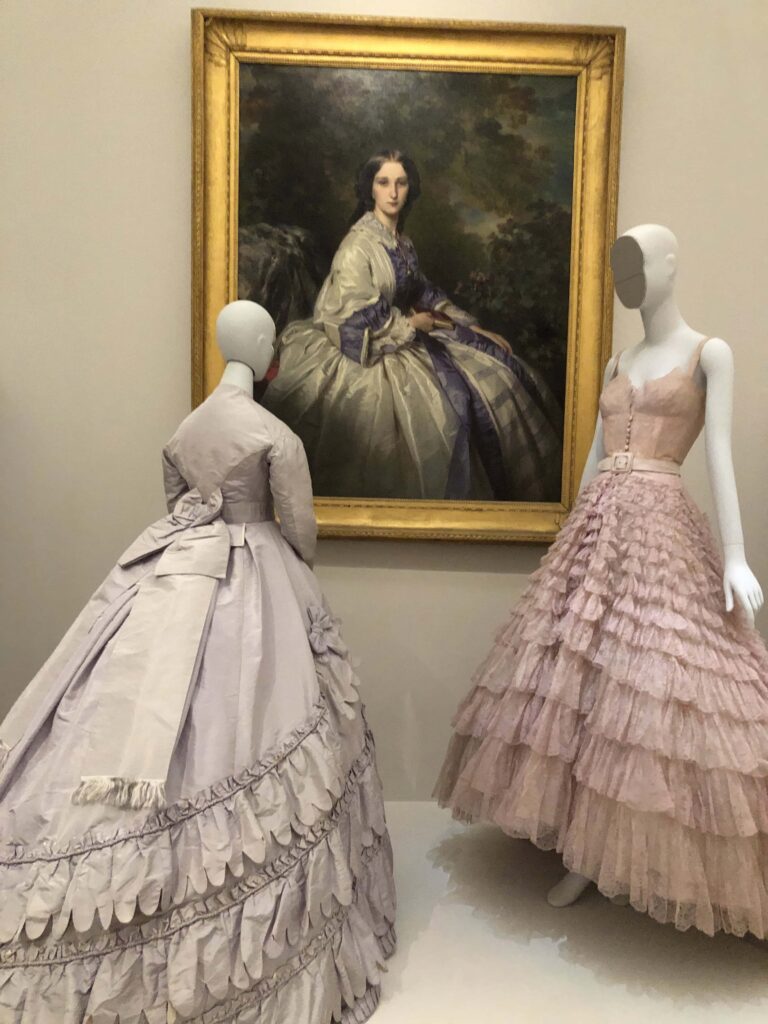
Just because I didn’t enjoy this exhibition, I don’t mean to discourage anyone from seeing it. Others may feel differently about the themes, texts, and curation than I did. Even if not, there are some really interesting and memorable works of fashion to see here; some of my favorites are illustrated throughout this article. Plus, this exhibition inaugurates the Met’s new Condé M. Nash Galleries, which seem like a great addition to the museum.
Costume Art is on view at the Metropolitan Museum of Art through January 10, 2027.