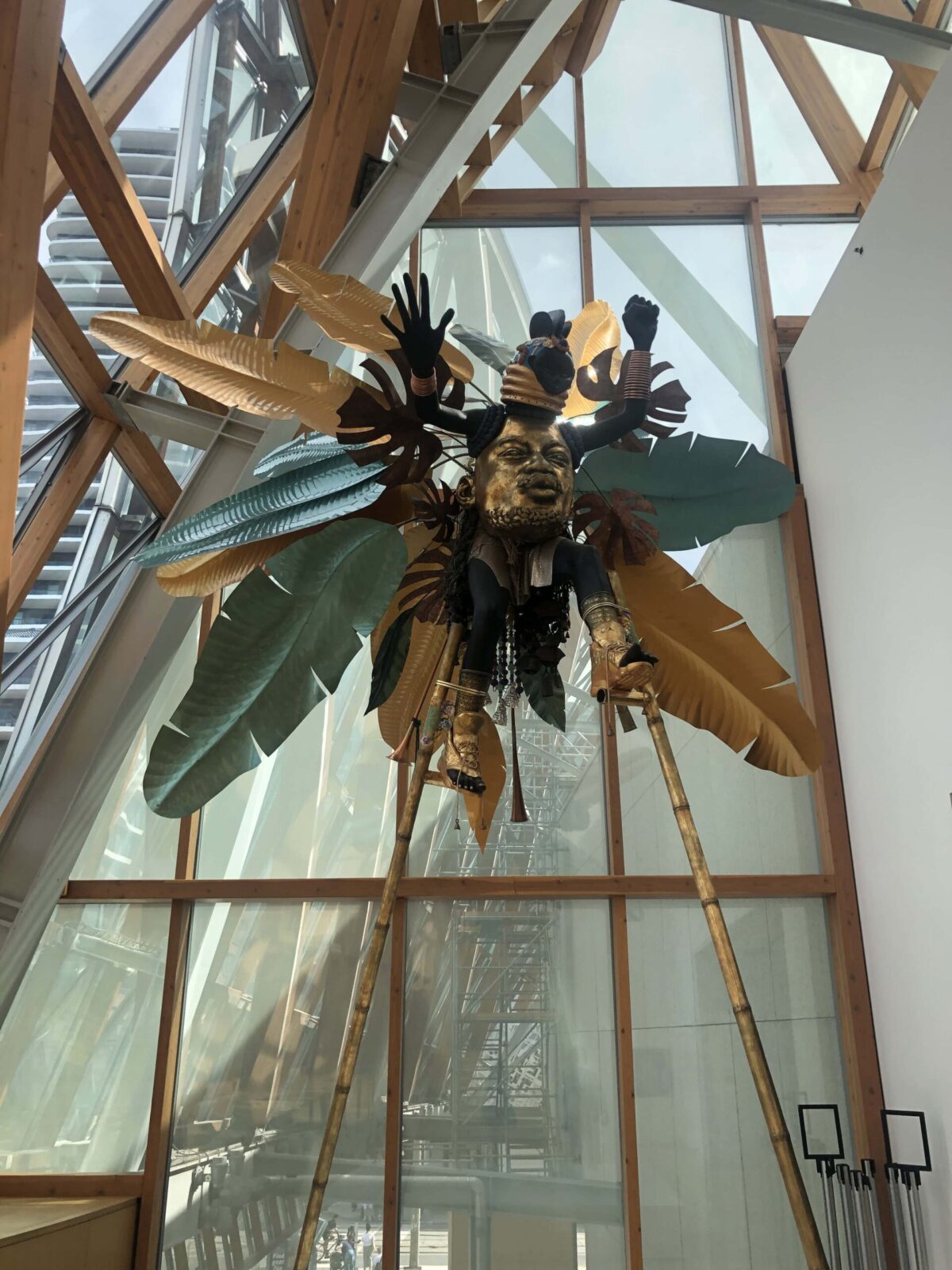
Cover image: Zak Ové, Moko Jumbie, 2021. Art Gallery of Ontario, Toronto, Canada. Photo by the author.
The Art Gallery of Ontario (AGO) is a major art museum in Toronto. Primarily featuring Canadian and European art from the Middle Ages to the present, AGO has plenty on view. For me, the museum’s highlights include Canadian paintings, medieval boxwood miniatures, large-scale sculptures by Henry Moore, and contemporary Indigenous paintings. I also saw a loan exhibition of French Impressionist paintings from the Dallas Museum of Art and visited one of Yayoi Kusama’s famous Infinity Rooms (both soon to close). I believe I explored at least most of the museum during my one-day visit, though I certainly wasn’t able to fully absorb all of it.
Canadian and Indigenous Art
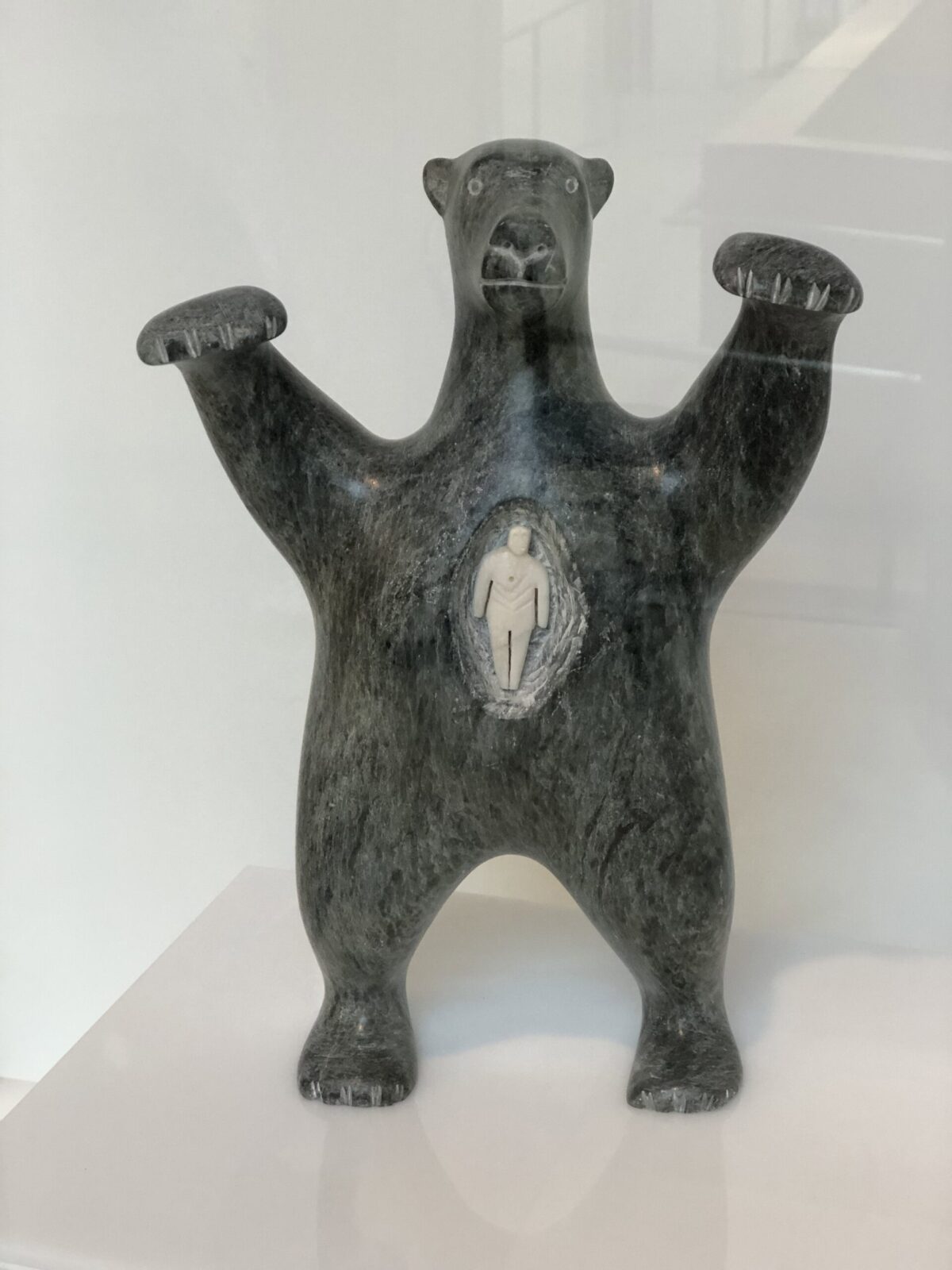
Completely unsurprisingly, the AGO has a massive collection of Canadian art, including historical and contemporary works by both Indigenous and non-Indigenous artists. I really enjoyed all these displays, and as a non-Canadian who is not very familiar with Canadian art, I also appreciated the copious accompanying information in the form of large text panels about the major artists involved.
Here are some of the many Canadian artists whose work I saw and enjoyed:
- Emily Carr (1871-1945): I had actually seen Carr’s work before, but I primarily thought of her as painting ecologically-motivated landscapes. Here, I saw her First Nations-inspired paintings and found them to be really interesting. I also enjoyed her painting Study in Movement, where the swirling brushwork of the green background really does create a sense that the air is moving.
- Lawren Harris (1885-1970): Harris was a landscape painter, so it’s probably no surprise I responded to his art. Although he painted in a variety of different styles throughout his career, I most enjoyed his semi-abstracted modernist landscapes where elements like trees, mountains, clouds, and glaciers are reduced to hard-edged geometric forms. That would not usually be my cup of tea, but it really worked for me here.
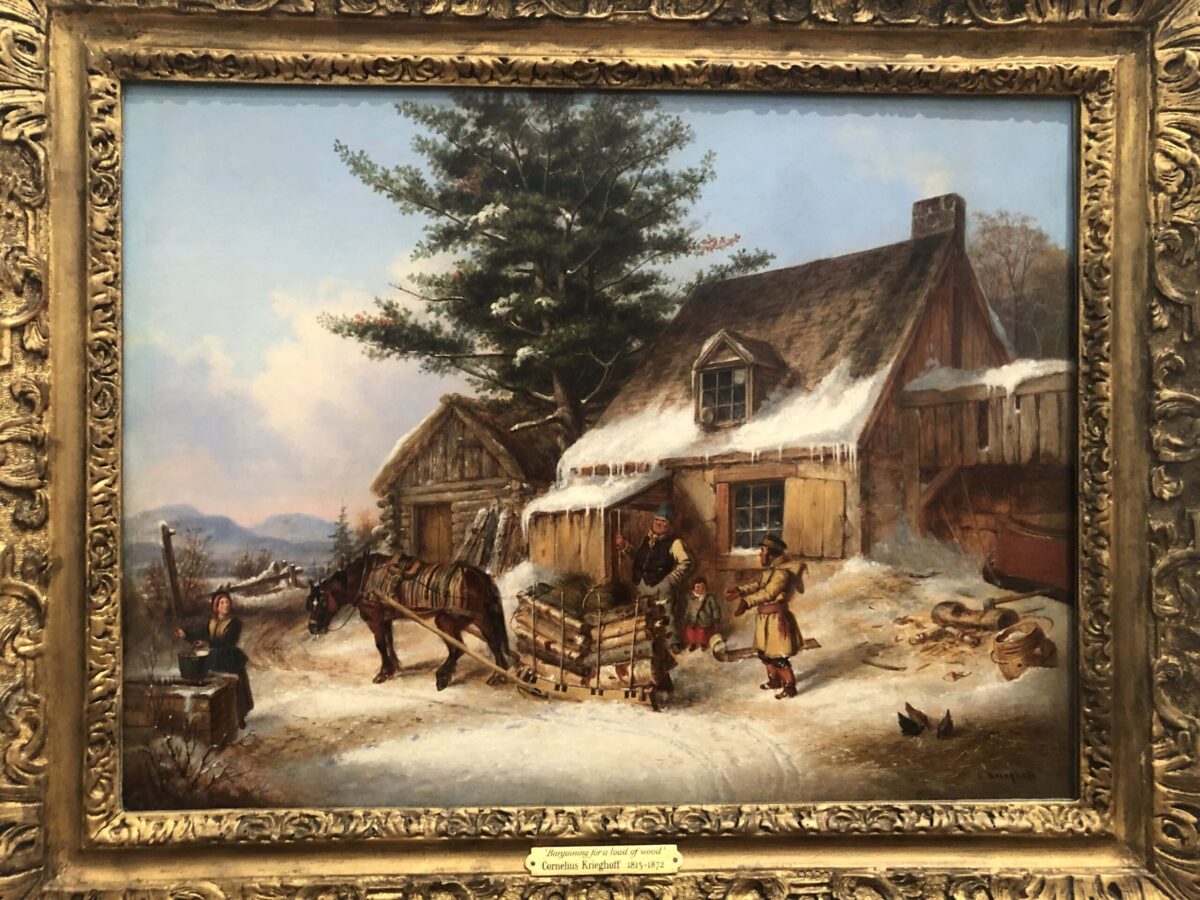
- Cornelius Krieghoff (1815-1872): This Dutch-born artist painted scores of romanticized views of settler life in 19th-century Quebec. He made beautiful landscape paintings filled with snow or fall foliage, as well as genre scenes that feature a surprising number of overturned sleds, startled animals, and more. I like how his work, which fills several entire rooms at AGO, brings the Dutch peasant paintings vibe to rural Canadian subject matter.
- Rita Letendre (1928-2021): Letendre was an abstract painter of Indigenous heritage. I really responded to her large painting And There Was Light (1999), which is definitely abstract but also strongly called to mind a particularly vivid sunset.
- David Brown Milne (1882-1953): Milne was an unconventional artist who used an drawing technique of his own creation that gives an almost embroidery-like impression. To be honest, Milne’s art did not particularly resonate with me, but I still found it to be quite memorable. The Art Gallery of Ontario has an extensive collection of his art and papers.
- Luke Parnell (b. 1971): Parnell is an Indigenous artist from the Northwest Coast. At AGO, I saw a series of his paintings in a special exhibition that seemed to somehow engage with prior exhibitions of Northwest Coast Indigenous art. While I didn’t have the background knowledge I would need to fully appreciate it, I certainly found his paintings to be very visually compelling and fascinating and would have been very happy to learn more about the ideas behind them.
- Mary Hiester Reid (1854-1921): Reid was one of many Canadian Impressionists I saw at AGO, but I found myself gravitating towards her works in particular even when I encountered them in different galleries throughout the museum. I especially liked her Chrysanthemums: A Japanese Arrangement. This museum displays a nice proportion of works by female artists, both Canadian and otherwise.
European Art
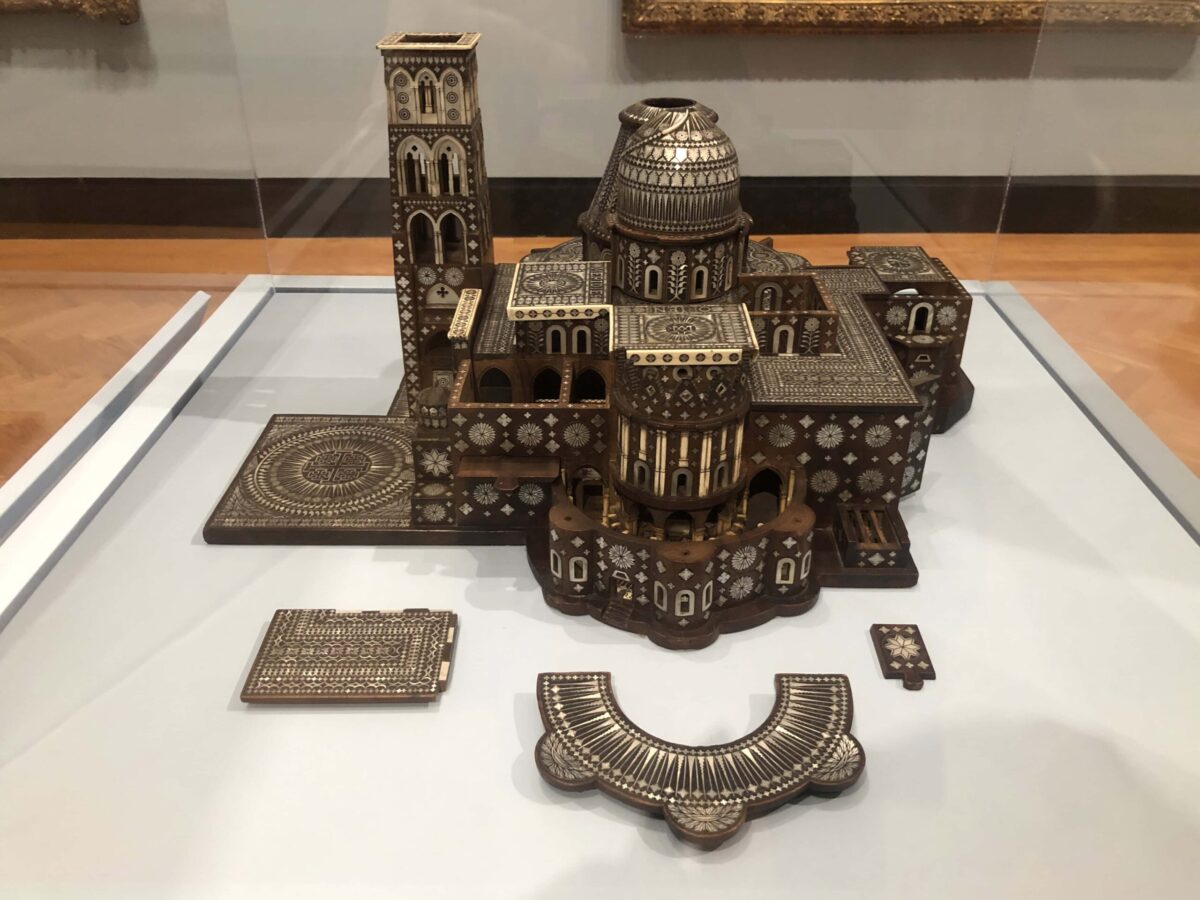
The Art Gallery of Ontario has a nice selection of European art from the Middle Ages to the present, including a room filled with works by Rembrandt and his followers, some lovely Renaissance art, Impressionism, portrait miniatures, and an Arthurian painting by John William Waterhouse. There’s also a memorable bone, wood, and mother-of-pearl model of the Holy Sepulcher in Jerusalem, shown above.
In addition, there’s a small gallery filled with small ivory busts by Benjamin Cheverton (1794-1876). Cheverton invented a rather ingenious-looking mechanical machine (also on display in this gallery) that could duplicate existing statues on a smaller scale, and he used it to create and sell statuettes of famous people. This room is packed with busts depicting celebrated authors, scientists, monarchs, politicians, and military leaders, especially from 19th-century Britain. There were rows and rows of Shakespeare and Queen Victoria alone. Mass produced (ish) for people who wanted small images of celebrities, these busts seem like precursors to today’s bobbleheads and Funko Pops.
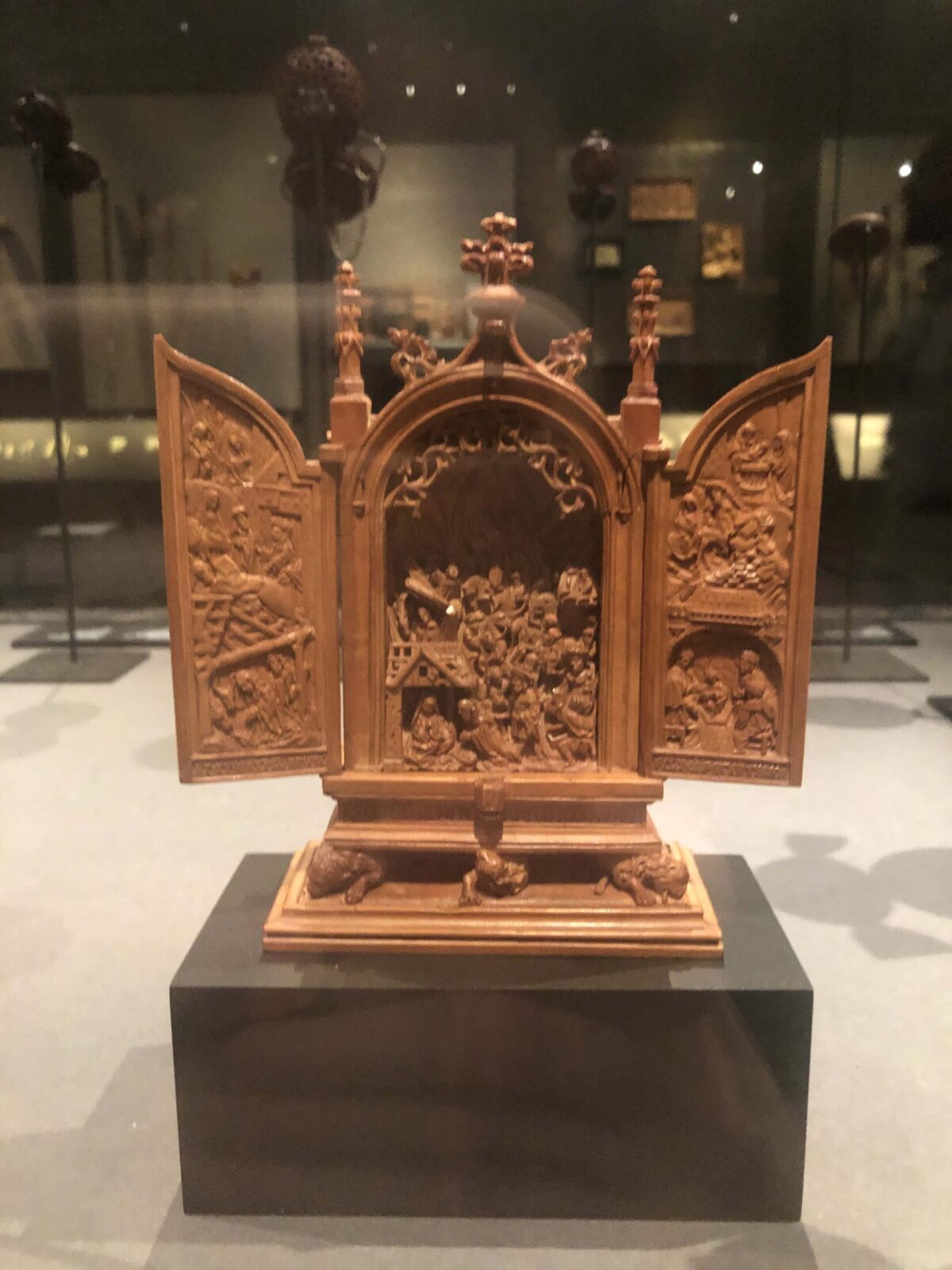
On the theme of tiny-but-fantastic artworks, AGO also has the world’s largest collection of medieval boxwood miniature carvings. These are tiny objects like prayer beads, combs, and even dollhouse-sized altarpieces intricately carved from boxwood. They were mostly made in the Netherlands in the early-16th century. They are fascinating for the amount of depth, detail, and naturalism they achieve in such small and delicate spaces, partly thanks to boxwood’s hardness and fine grain. AGO’s display goes beyond the hinged prayer beads I’ve previously seen at the Met to also show diptychs and triptychs, knife handles, spoons, combs, figurines, a standing cross, and more. The museum even sponsored an in-depth study of this tradition, which you can read all about online. I’ve wanted to write an article about Gothic boxwood micro-carvings for some time, and maybe now I finally will.
More Fun Things
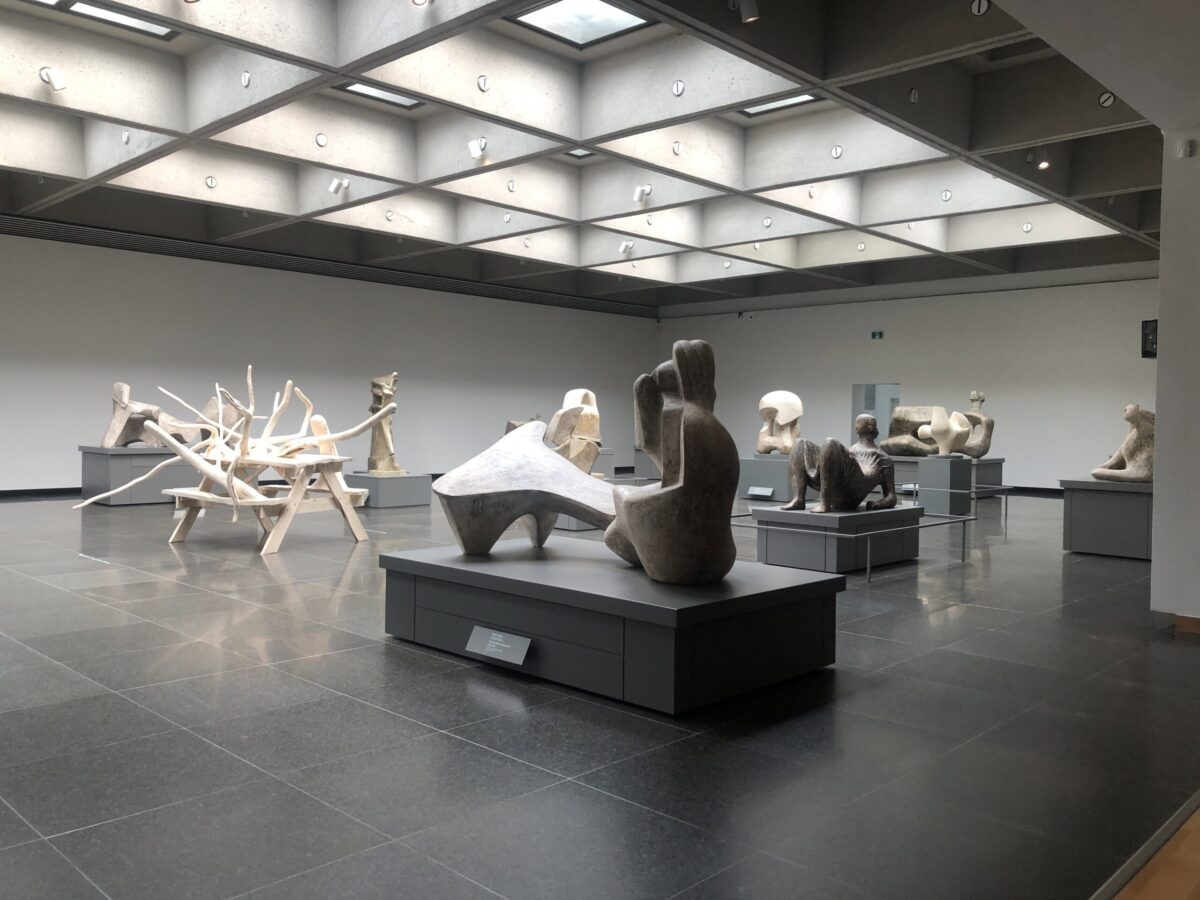
The Henry Moore Sculpture Center at AGO is the largest public collection of works by the Modernist British sculptor Henry Moore (1898-1986). The sculptures are big, bold, and minimalist, and I really enjoyed them. A few other large sculptures by other artists appear within the group as well.
The museum’s basement contains an extensive display of ship models. This isn’t really my thing, but the little bit I saw actually looked like it could be kind of cool.
Although not a destination for art that’s not European or Canadian art, the Art Gallery of Ontario does have a fairly new collection of global African art, including the contemporary mixed-media sculpture shown in this post’s cover image.
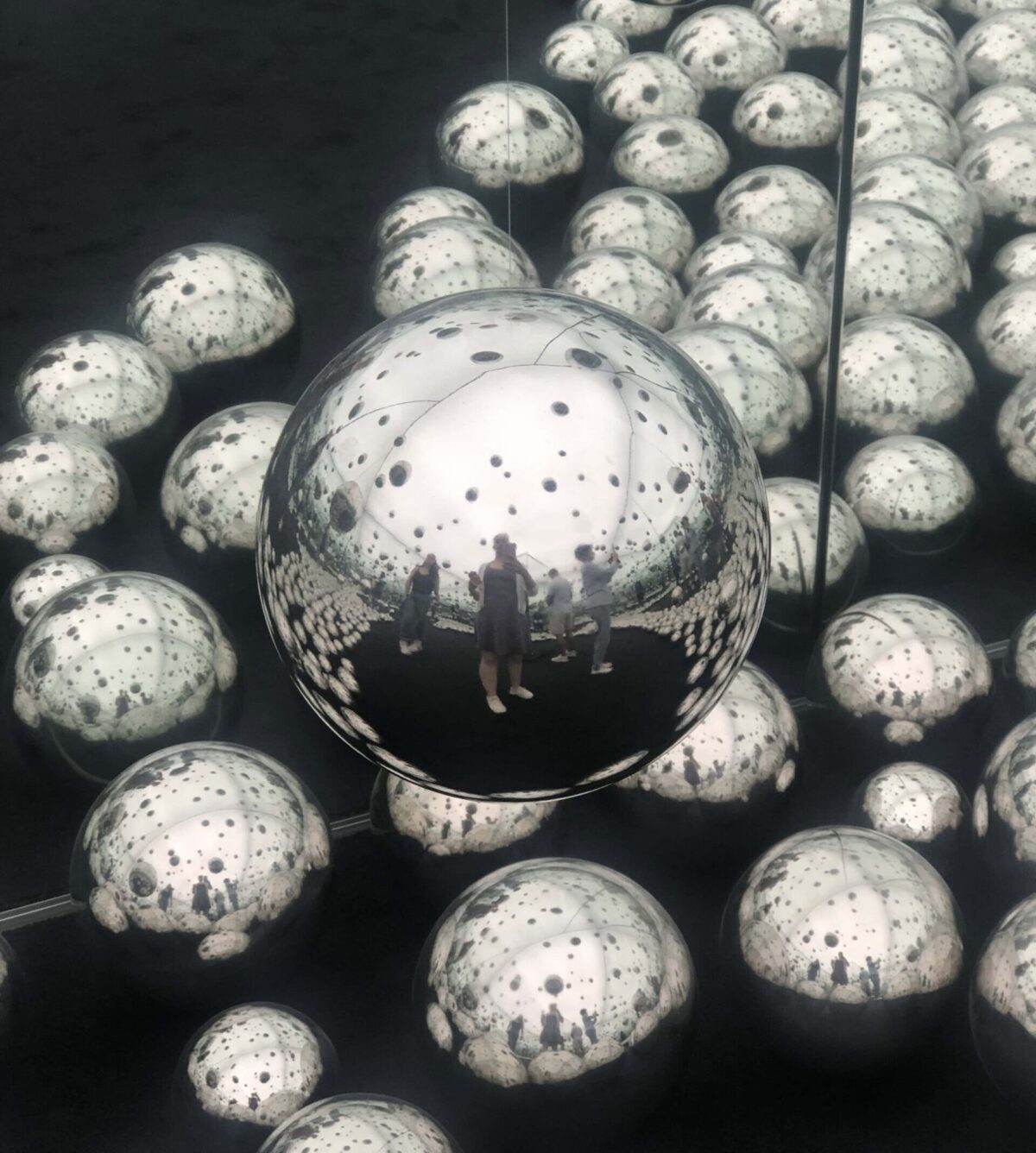
During my visit, I also got to experience Yayoi Kusama’s INFINITY MIRRORED ROOM – LET’S SURVIVE FOREVER, although it will go off view at the end of October. Kusama (1929-2026) was a very popular Japanese artist best known for her exuberant, polka-dotted artworks, and she has several Infinity Rooms displayed all over the world.
This is an immersive contemporary art display in which a small room is made to look infinitely large through a combination of mirrors and highly-reflective silver balls that kind of look like Christmas ornaments. It’s a fun, slightly surreal experience, and I’m glad I got to finally actually visit one. That said, there are many different Infinity Rooms, and I think this one was maybe not quite as magical on account of being fully lit, unlike many of the others where the rooms are dark with lighted elements in place of the reflective balls.
Details
The Art Gallery of Ontario is located in the Chinatown district of Toronto. Admission, which costs $30 CAD for adults, includes most special exhibitions, although a believe a few might cost extra. I really enjoyed my visit and saw lots of great stuff there, especially in the realm of Canadian art.
I did find the museum a bit difficult to navigate, and the online map didn’t help, because it only displays gallery numbers and not what type of art is in which section. If you want to see African art specifically, for example, the map is not going to help you find it. At some point, I just ended up wandering around hoping to find areas I hadn’t visited before. But this did not detract from my experience too much.