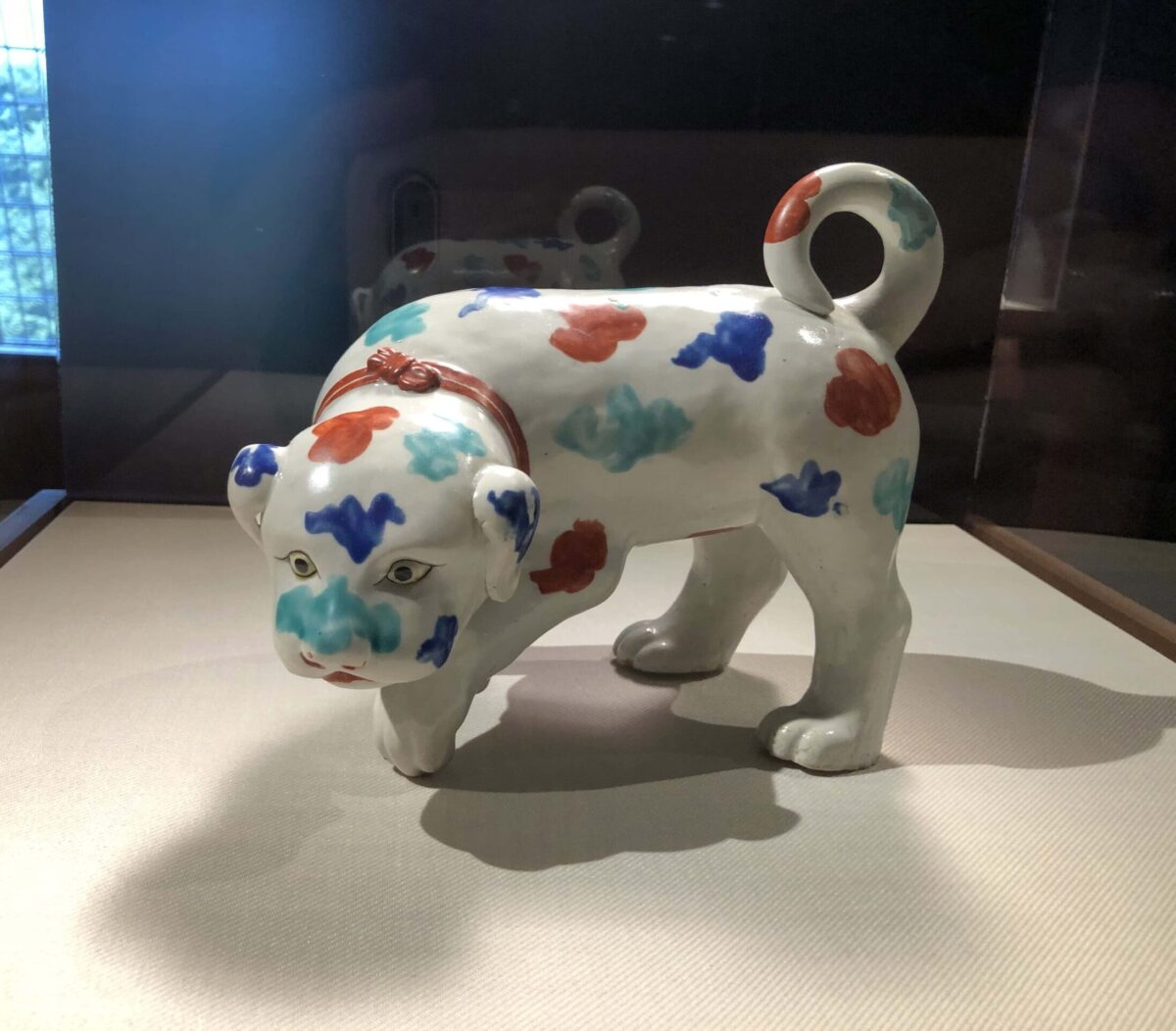
The cover image doesn’t have anything to do with art writing. It’s just charming.
Model of a dog. Japanese, Edo period, late-17th cen, Kakiemon porcelain. Met Museum, New York. Photo by the author.
Have you ever read something about art and felt like it was written in another language? Maybe it’s filled with unfamiliar words and impenetrable ideas, or perhaps you struggle to interpret verbiage that seems like it should make sense but somehow doesn’t. If so, you’ve discovered the common trope of difficult-to-read art writing. I alluded to this problem in a recent exhibition review, so I figure it’s time to dive into the wild world of art writing here on a blog expressly dedicated to legible and accessible art content.
Why is art writing so difficult?
Popular opinion seems to be that art writing is purposely opaque because its authors are snobs who love to make people feel dumb. I don’t necessarily disagree, since that is pretty on brand for the art world. However, I think this is a simplistic answer that overlooks how difficult it actually is to write about art.
As someone who spends a lot of time doing exactly that, I can confirm that it’s not an easy task. We just don’t have common words for most of what we want to talk about, either the visuals themselves or the ideas behind them. You can explain these things in plain English – I do it all the time on this website – but it requires careful crafting and plenty of words. Since art by nature involves so much complexity and subjectivity, I fully understand the instinct to tangle yourself in layers of verbiage in an effort to express things that feel elusive and indescribable.
This is why art terminology has developed to quickly and easily reference concepts like styles, visual effects, and techniques; similarly, academic language can allow for nuanced discussion of interpretation, historical context, subject matter, and more. It’s just like sports jargon, which is helpful for players and fans but completely baffling to most other people. There’s also language borrowed from philosophy, where tricky prose is probably unavoidable given the challenging nature of the art theory and aesthetics in particular.
Is it even necessary?
For all these reasons, I would argue that a certain amount of art jargon and complicated art writing is legitimate and warranted, but only as long as it’s not misused. Using a single word to express something that would generally take six is better when addressed to someone already in the know. Otherwise, the longer, plain-English version is actually easier and clearer. Similarly, the accuracy and nuance that academic jargon allows is necessary in some situations but undesirable in others.
While I do not believe that so-called “art speak” exists expressly to make writers seem smart and readers feel stupid, that can unfortunately be the result when it’s used improperly. I think problems come when writers either misjudge who they’re writing for or prioritize looking smart and sophisticated over serving their readers. (In this latter case, accusations of gatekeeping and snobbishness are probably warranted.) I wouldn’t overlook the role of habit either; when you’re familiar with all the fancy words, it’s easy to start using them for their own sake even when plain-English synonyms would work just as well.
International Art English
When complex language is intentionally used to an extreme, you get what’s sometimes called International Art English. This is the verbose, buzzwordy, almost willfully impenetrable writing that is especially prevalent in the world of contemporary art. Texts written in this manner tend to use lots of fancy words and sentence constructions that sound really deep and impressive but are very difficult to derive real meaning from. Clarity of communication is not the goal here, but sounding impressive definitely is.
Tips for understanding challenging art writing
- Take your time. Go slowly. If you don’t understand something, read the passage more than once to see if you can make sense of it.
- Simplify. Complex phrases are often just fancier ways of expressing more straightforward concepts. See if substituting easier synonyms for big words makes things clearer.
- Look for word roots. International Art English, in particular, likes to use familiar word parts in unfamiliar ways, often as a different part of speech or with unusual prefixes and suffixes attached. If you can at least make sense of the word’s root, you can do a lot with that.
- Look for themes. In lengthier texts, important ideas are usually stated multiple times in different ways. Look for words that recur and ideas the writer can’t seem to stop mentioning. Academic texts often follow a formula where they first tell you what they’re going to say, then they say it in detail, then they tell you what they’ve just said. So, you have three separate chances to figure it out.
- Get the gist. You don’t have to understand every little bit in order to gain something meaningful from a text. Focus more on getting the overall gist rather than fully comprehending every word, sentence, and idea.
- Get a good art dictionary. I recommend the Oxford Concise Dictionary of Art Terms.
- Try to separate the ideas from the writing. Don’t let intimidating writing turn you off to interesting ideas, but don’t be swayed by the fanciness of an argument, either. There is always room to be convinced or unconvinced.