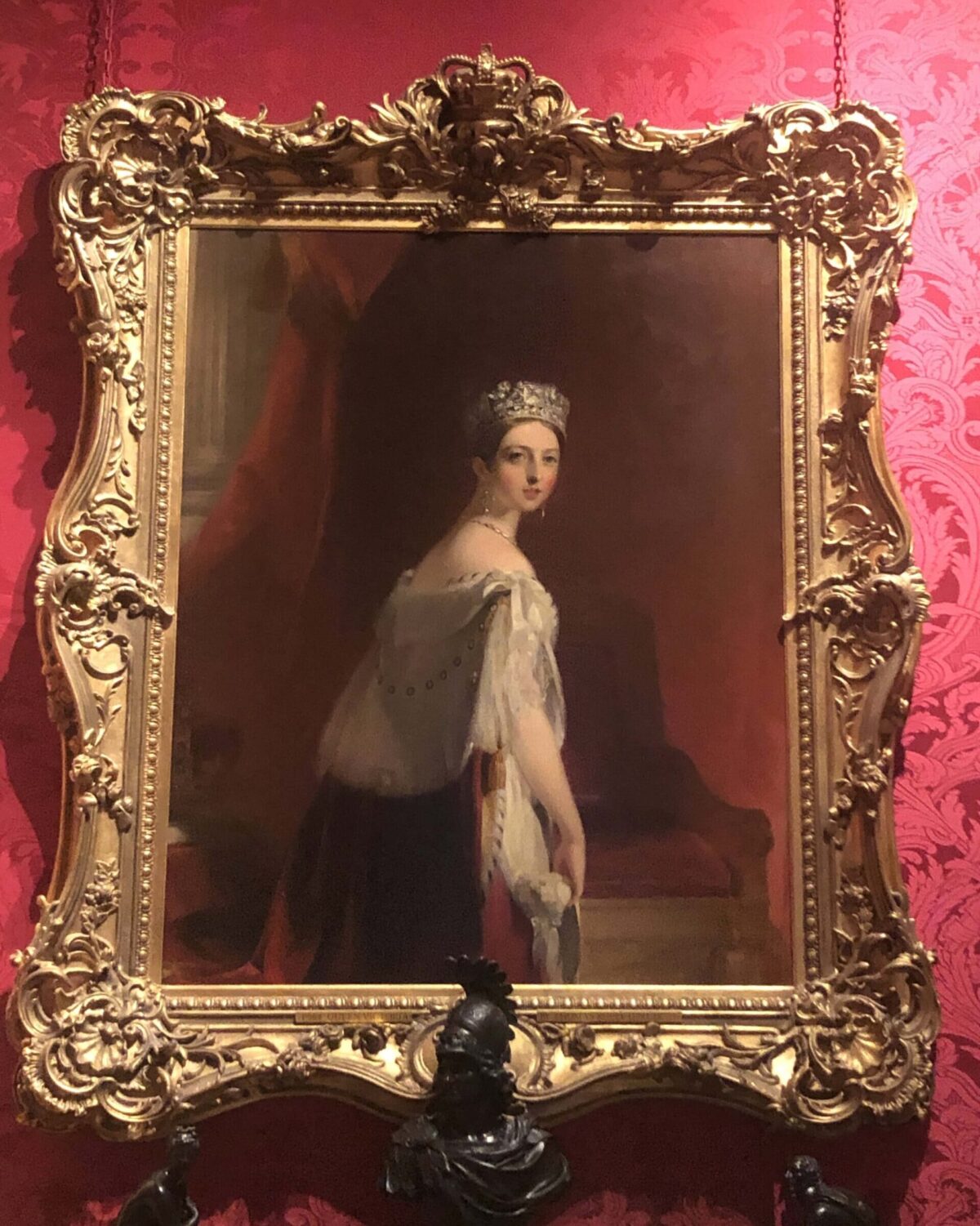
Cover image: Thomas Sully, Queen Victoria, 1838. The Wallace Collection, London. All photos in this post are by the author.
London is one of the best cities in the world for art. It is home to a massive array of art museums, countless galleries, world-class art collections within mansions and palaces, and a branch of nearly every major auction house. There’s art inside public buildings, especially churches, that are often architectural monuments in themselves. Circular blue plaques denote where great artists lived, worked, and created art history here, while their tombs and monuments fill the crypt of Saint Paul’s cathedral. The nicer hotels have historic paintings and modern art installations, and the Rosewood hotel even offers art afternoon tea (mine was Hokusai inspired and included Great Wave pastries)! No matter what kind of art you’re into, you can probably find lots of it in London.
So, it’s only appropriate that I spill the tea (pun intended) about my experiences in five great UK art museums that I visited this summer. Naturally, I couldn’t possibly stop by every London museum in a week, so I had to miss quite a lot, including the National Gallery, Tate Modern, and the Courtauld. So I guess I’ll just have to present this incomplete guide to London art museums at the moment and maybe plan to visit again in the future.
As always, please remember that everything in a museum (exhibitions, hours, pricing, artworks on display, general vibes, etc.) is always subject to change. If you visit one of these museums in the future, things may be different than described here.
If you enjoy this post, also check out my book, The Art Museum Insider.
The Wallace Collection
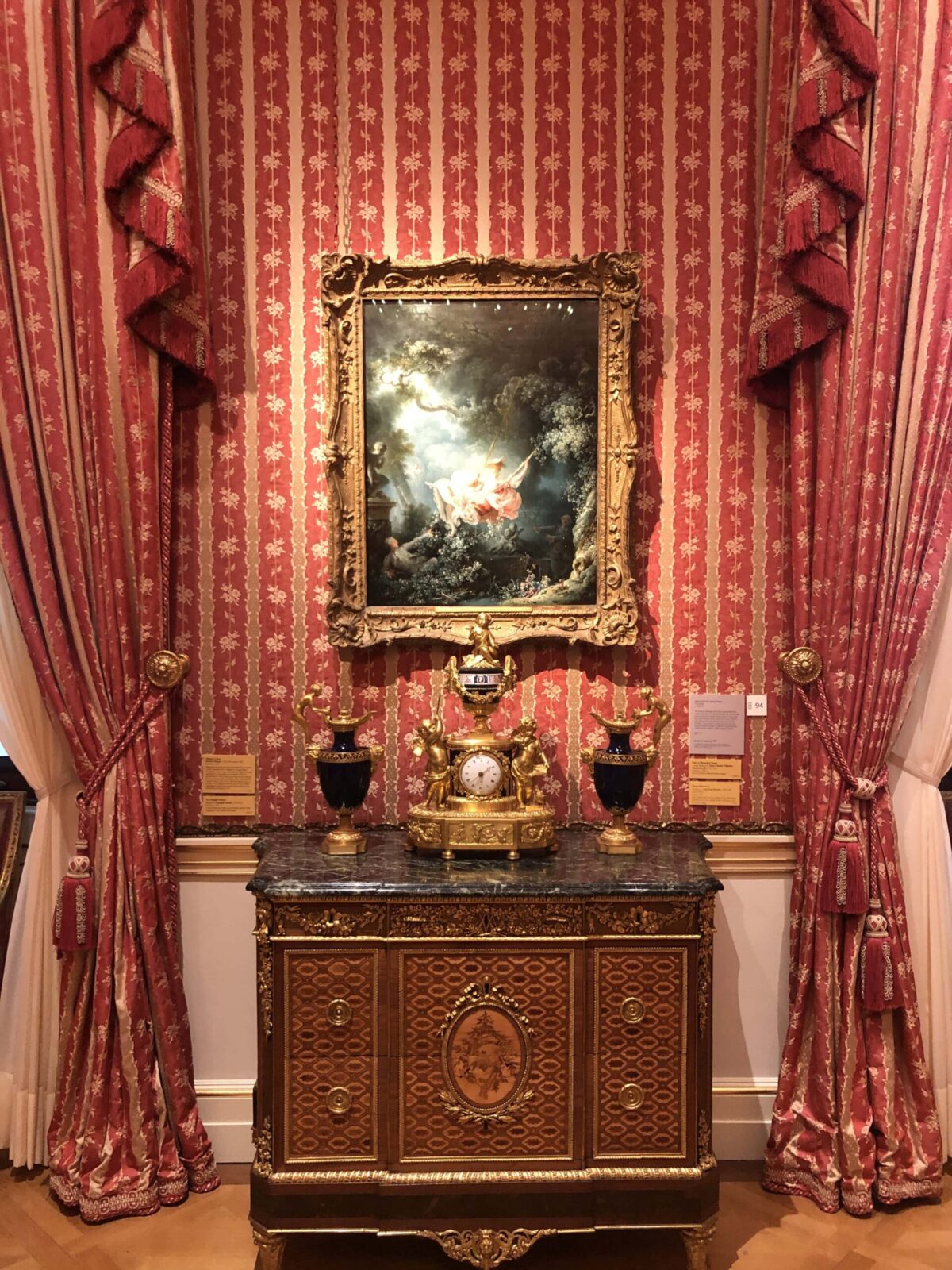
I visited the Wallace Collection on my first day in the city, and it was a real treat! It reminded me a lot of my favorite museum The Frick Collection, as both display fantastic selections of fine and decorative art in luxurious domestic interiors.
The Wallace’s biggest attraction is its selection of 18th-century French art, including a slew of Rococo paintings by Boucher and Fragonard as well as dazzling furniture by masters like Boulle and Reisner. There are also fantastic selections of British portraits, Dutch Golden Age paintings, and other old masters, as well as porcelain, clocks, medieval and Renaissance art objects, and more. Fragonard’s small, playful painting The Swing is the museum’s most iconic attraction, but English-American painter Thomas Sully’s portrait of the young Queen Victoria (shown at the top of this post) was my personal favorite. Some rooms display both furniture and artwork in luxurious interior settings where the gilt furnishings contrast spectacularly with the jewel-toned wall coverings. Others have more traditional gallery set-ups with paintings hung two or three high and large vitrines packed with objects.
And then there’s the arms and armor. Yes, that’s correct – the Wallace Collection has several huge rooms filled with historical armor and weaponry from Europe and Asia. This juxtaposition with the paintings and decorative arts is as unusual as it sounds, but it makes the museum extra memorable. Even if you are not a big fan of swords, muskets, or battle helmets, I recommend spending some time looking at the artistic details of the Islamic weaponry in particular. Plus, the horse armor displays are dynamic and exciting.
There’s much more to see in the Wallace Collection than its domestic house setting would seem to suggest – it’s significantly larger than the Frick despite the other similarities – so give yourself plenty of time for your visit here. If you need to refuel, there’s a nice cafe in a glass-covered courtyard in the center of the museum. There’s also a small but elegant museum shop with a nice selection of books and gifts.
Official website: The Wallace Collection
The Victoria & Albert Museum (V&A)
This one was probably my favorite! The Victoria & Albert Museum (better known as The V&A)*, is a huge museum that focuses primarily on design and decorative arts, meaning that things like ceramics, metalwork, and textiles take center stage. Alongside fantastic collections of medieval European, British, Islamic, and Asian arts, the V&A also has some really wonderful and unusual galleries that group objects by medium or art form rather than time and place. My favorite was the jewelry gallery, which displays a few thousand years of eye-catching, glittering pieces together in a dramatically-darkened room for easy comparison and delight.
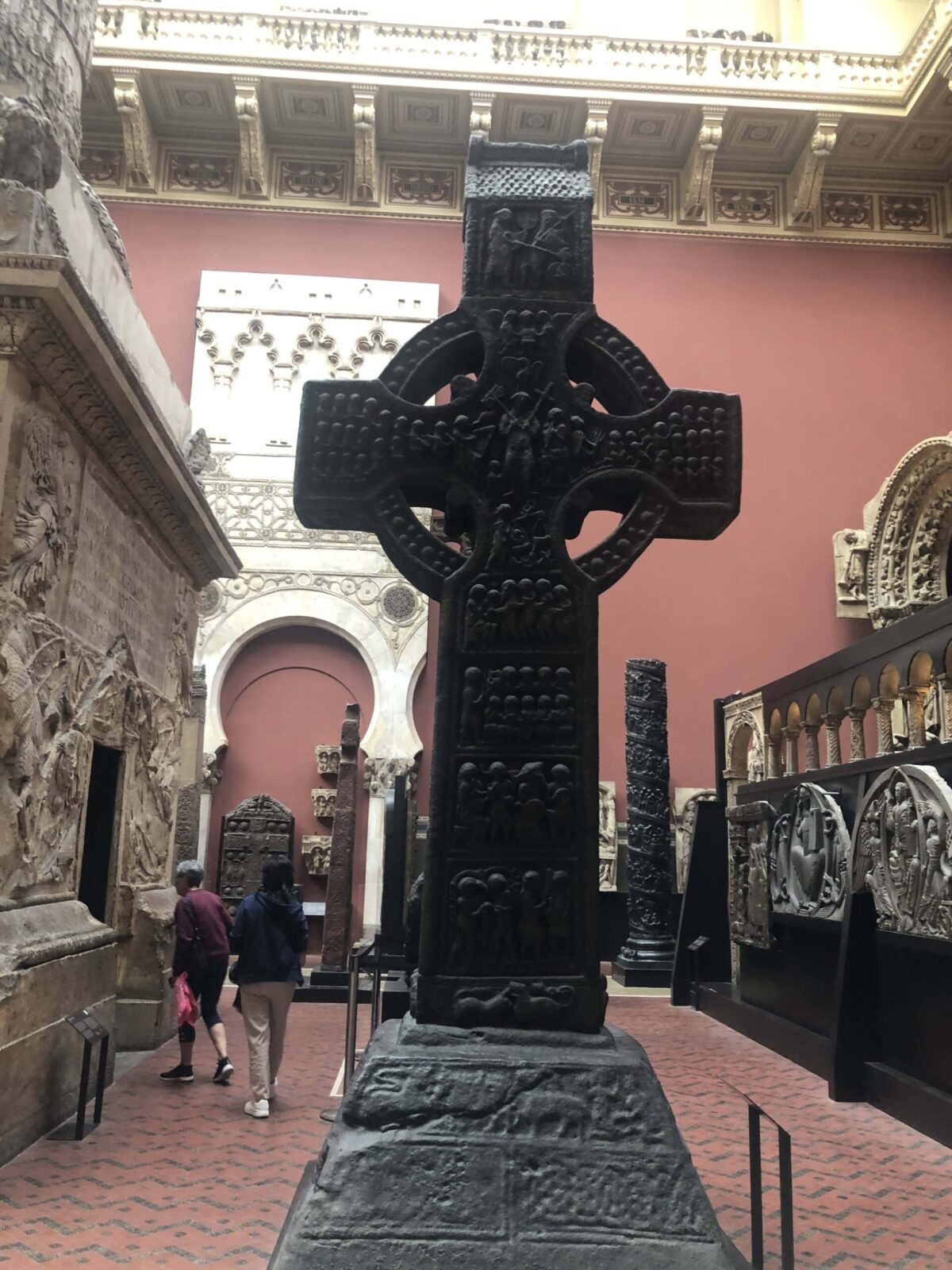
Perhaps even more special is the Casts Court, which is packed with plaster casts replicating celebrated monuments from classical and early modern Europe. Here, you can see full-size replicas of things like Michelangelo’s David, Trajan’s Column, and the entry portals of church of Santiago da Compostela. Plaster casts were popular in 19th-century museum collections, so the V&A Casts Court is a rare survival of what would have once been a common sight in European and North American museums. It’s a really unique experience, especially because of the size and diversity of the casts collection, so I highly recommend walking around what I thought of as a forest full of art.
For me, the highlights of the V&A, in addition to what I’ve already mentioned, included the following:
- The Ardabil Carpet: A massive and famous example of Persian carpets, the Ardabil Carpet takes pride of place in the center of the V&A’s galleries for Islamic arts.
- The Codex Forster, aka Leonardo da Vinci’s notebook: You can see his mirror writing and everything. The codex is in room 64, one of the Medieval and Renaissance galleries, but it isn’t prominent, and I only found it by accident. Make sure to hunt around until you see it.
- Carlo Crivelli’s Madonna and Child: I love Crivelli and am always delighted to see his work in person, where his clever techniques and illusions are most effective. A St. Jerome painting by Crivelli’s brother Vittorio is also on view nearby, and both are close to the Codex Forster.
- The Devonshire Hunting Tapestry: This is a huge 15th-century tapestry depicting medieval nobles having a hunting party. There’s tons going on in the scene, and the museum provides digital guides in the gallery to help you sort it all out.
- Sir George Gilbert Scott’s 1862 Gothic Revival choir screen for Hereford Cathedral: Located on a balcony in level 2, this massive piece of ironwork is visible from the ground floor rotunda below. Not only can you see it up close on the balcony, but there’s also a series of informative panels detailing its construction and restoration.
- Queen Victoria’s coronet: Located in the Jewellery Gallery, this coronet was designed for Queen Victoria by Prince Albert. There’s a mirror in the display case just behind the coronet. If you get stand at just the right angle (probably bend down a bit), you can see your reflection “wear” it. Many thanks to the teenagers behind me in the gallery who immediately realized this when I didn’t. At the time of writing this, I believe that the coronet is on loan in France and will be there for the next few months.
- Dale Chihuly’s V&A Chandelier, which hang from the dome of the rotunda.
The V&A is definitely one of those museums where you need to spend all day and still won’t get to see anywhere near everything. Personally, I’m still sad to have missed the extensive porcelain galleries and the stained-glass display, as well as nearly the entire British wing and some of the Asian art galleries. You’ll simply have to pick a few areas that interest you, start with them, and then see where the rest of the adventure takes you. The V&A has several food service options, including a seasonal one in the outdoor John Madejski Garden. If it’s open, I suggest sitting out there and looking at all the delightful Victorian details on the four building facades that surround you while you eat.
*The V&A actually includes several museums throughout London and elsewhere in the UK. Here, I’m talking exclusively about the museum’s main branch in London’s South Kensington neighborhood.
Official website: V&A South Kensington
The British Museum
Filled with treasures from around the world, the British Museum is almost too much to describe. Maybe it’s not quite as big, overwhelming, or crowded as the Louvre in Paris, but it’s in the same territory, especially on the last day of my trip when I was starting to get burnt out. The British Museum is famous (and often controversial) for containing milestones in world history like the Rosetta Stone and the Parthenon Marbles. However, the objects I truly came to see were the Sutton Hoo ship burial finds and the Lewis Chessmen.
I’ve written about Sutton Hoo and its early medieval treasures before, so suffice it to say that finally viewing these gold, garnet, and glass objects in person was truly a dream come true. In person, the interlaced gold belt buckle was especially stunning. It was also cool to see some of the less famous Sutton Hoo finds like the corroded sword, the whetstone, and some of the not-so-pretty bits of armor. Meanwhile, the Lewis Chessmen are a set (several sets, in fact) of highly-charismatic chess pieces carved out of walrus ivory. They were unearthed on the Isle of Lewis in Scotland – some of the other pieces are in Scottish museums – but their origin is still undetermined though probably Viking. With their detailed accessories, expressive faces, and sometimes comical postures, the Lewis Chessmen are fun and memorable and tend to attract small crowds. I especially liked the queens with their decorated thrones, worried-looking gestures, and drinking horns. If the chess pieces look familiar to you, that may be because replicas of them were used in the first Harry Potter movie.
The ancient and medieval European galleries also contain a host of other treasures, from iron-age jewelry and Romano-British art to Viking-era hoards and fascinating medieval objects like the Franks Casket and the Fuller Brooch (the latter of which was sadly not on view during my visit). The Lindow Man prehistoric bog body is also in one of these galleries, but I tried to avoid it.
There’s also plenty more to see at the British Museum, including:
- The ancient Egyptian section, where it’s hard to get near the Rosetta Stone but easy to enjoy monumental sculptures, small deity statuettes, mummy cases, and more.
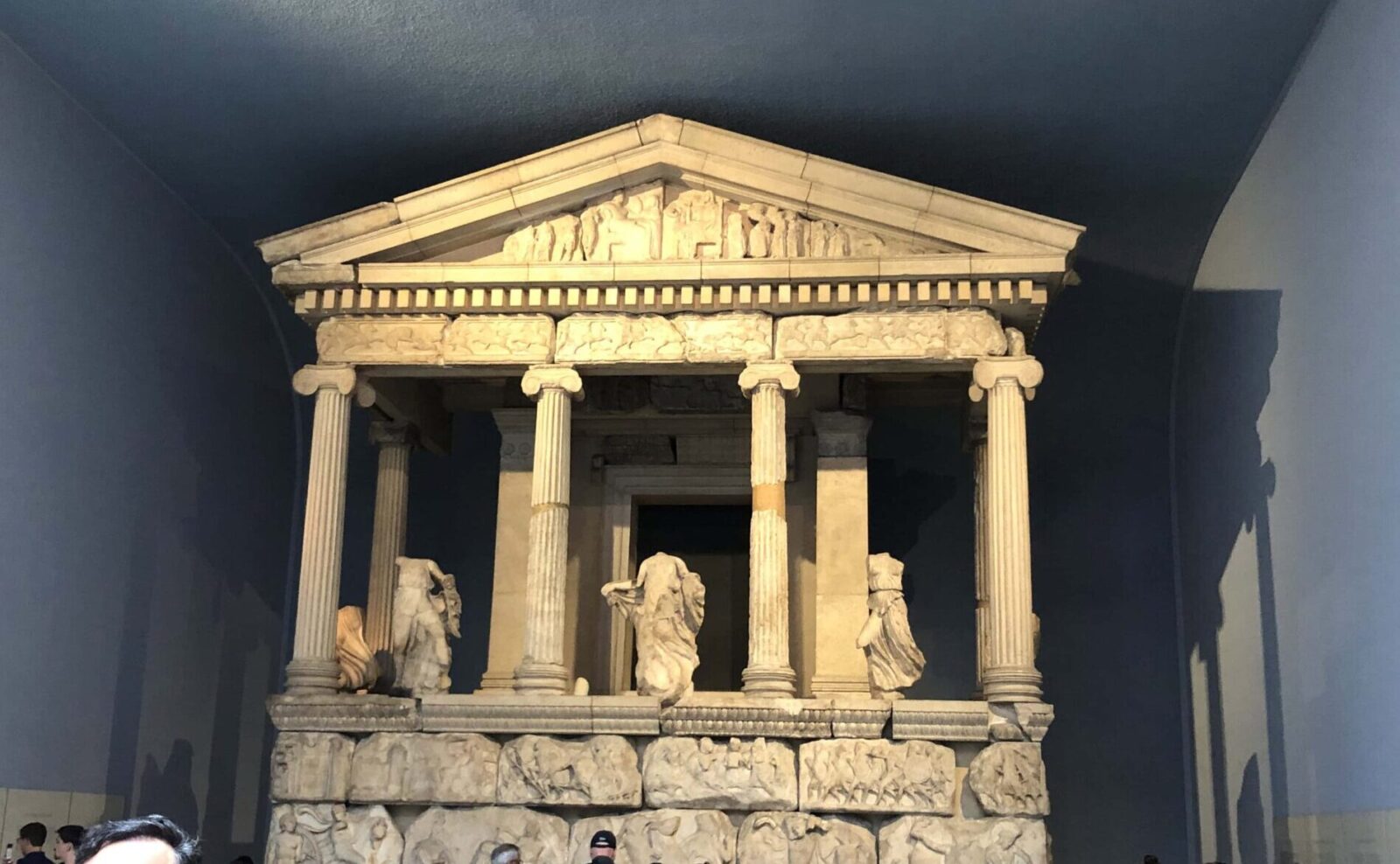
- The Parthenon Marbles, which are the sculptures that once adorned the exterior of the Parthenon in Athens, Greece. They are among the most treasured and contested objects in world art history. There are plenty more artworks from the classical world here, too. I liked the Nereid Monument best; it’s a nearly-complete tomb with nereid (sea nymph) statues from the Lycians, who lived in what’s now Turkey.
- The numerous galleries dedicated to the ancient Middle East are simply not to be missed! Highlights include rooms liked with massive royal relief sculptures and larger-than-life winged lions from Assyria, art treasures from the Mesopotamian city of Ur, and what I believe is the world’s largest collection of cuneiform tablets. After the early medieval stuff, this was probably my favorite collection area.
- Hoa Hakananai’a, who is one of the great moai statues from Rapa Nui (Easter Island). Like some of the other works in the museum, it makes me sad that this object is here in London, since I know that the people of Rapa Nui very much want it back. That said, I have to admit that I appreciated getting to see the statue in person.
- Asian art collections (in recently-renovated galleries, I believe), the Waddesdon Bequest of Renaissance art objects, and the prints collection – none of which I had the chance to explore.
Like the V&A, the British Museum is massive and can’t easily be experienced even in a full day. You’ll have to pick your areas to explore and resign yourself to missing out of some other great stuff. Although the museum is free to visit the permanent collection, I reserved timed entry online because of its popularity. The museum has several places to eat but not enough places to sit; on the other hand, it has probably the best museum shop I’ve ever experienced. Whether you want replicas, books, London-themed trinkets, or souvenirs to bring home for others, you’ll find plenty of options. While you’re in the museum’s iconic Great Court, be sure to step inside the former British Library Reading Room. The books have moved to a new building, but you can still enjoy the reading room’s quiet grandeur.
Official website: The British Museum
Tate Britain
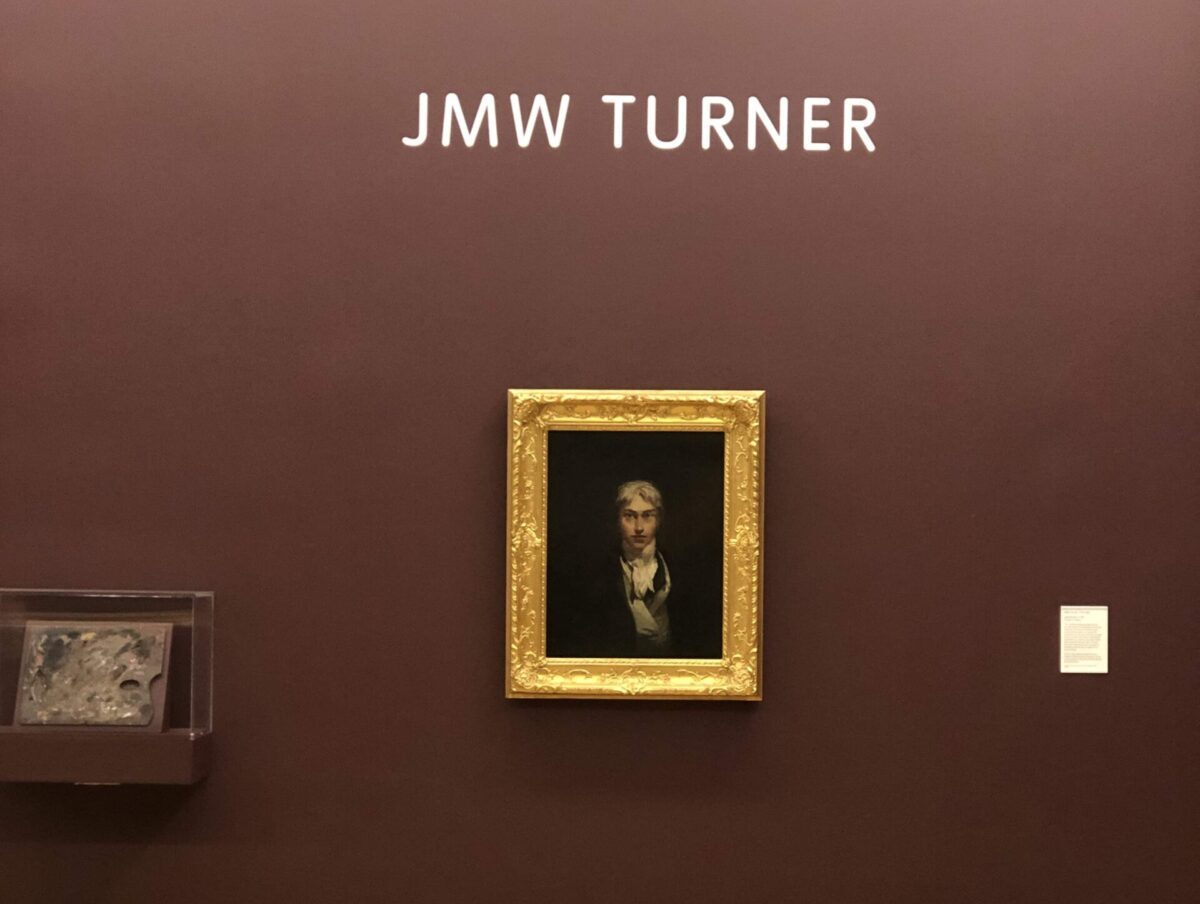
The Tate Britain is the city’s venue for British art specifically. It covers about 500 years from the mid-16th century to the present day. Unfortunately, I didn’t have much time to spend here (it’s actually quite lucky that I got to visit this museum at all), but I was able to experience two of its biggest attractions – the Turner collection and the Pre-Raphaelites.
The Tate Britain is home to a major collection of works by celebrated British landscape painter Joseph Mallord William Turner (1775-1851), donated by him to the nation upon his death. The permanent display takes up nine dedicated galleries showing paintings and sketches from all eras of his career, from relatively conventional early landscapes to unfinished experiments that are almost completely abstract. Thus, the overall installation gives a much fuller view of Turner’s art than I’ve ever seen before. If you are a Turner fan like I am, you definitely have to stop by if you’re in town.
Tate Britain also owns many of the most famous Pre-Raphaelite paintings, including John Everett Millais’s Christ in the House of His Parents and Ophelia, John William Waterhouse’s The Lady of Shalott, and William Holman Hunt’s The Awakening Conscious. I am not actually the biggest fan of the Pre-Raphaelites, but this is a fantastic collection, and I’m glad I got to see it. Don’t miss John Singer Sargent‘s delightful Carnation, Lily, Lily, Rose in the same room.
Official website: Tate Britain
Bonus: The Ashmolean Museum
The Ashmolean Museum is at the famous University of Oxford, about an hour by train from London. I truly enjoyed this museum and recommend it to anyone spending time in Oxford, which is why I’m including it despite it not being in London.
The Ashmolean covers both art and archaeology, and I thought it was very successful on both fronts. On the archaeological side, it has ancient finds from countless excavations, including some pretty major ones, ranging from the British Isles to the Mediterranean to the Middle East. The galleries dedicated to Minoan Crete and Mycenaean Greece were big highlights for me. While the British Museum has even bigger collections of Egyptian and Near Eastern antiquities, I actually enjoyed the Ashmolean’s displays better because of how well they explained the history of the finds and what they mean for our understanding of these cultures. I also really liked a set of galleries that explored major archaeological themes like writing and money in a cross-cultural way. Be aware that some of the Ashmolean’s archaeological displays include human and other hominid remains – mostly bones – which some people might not want to see.
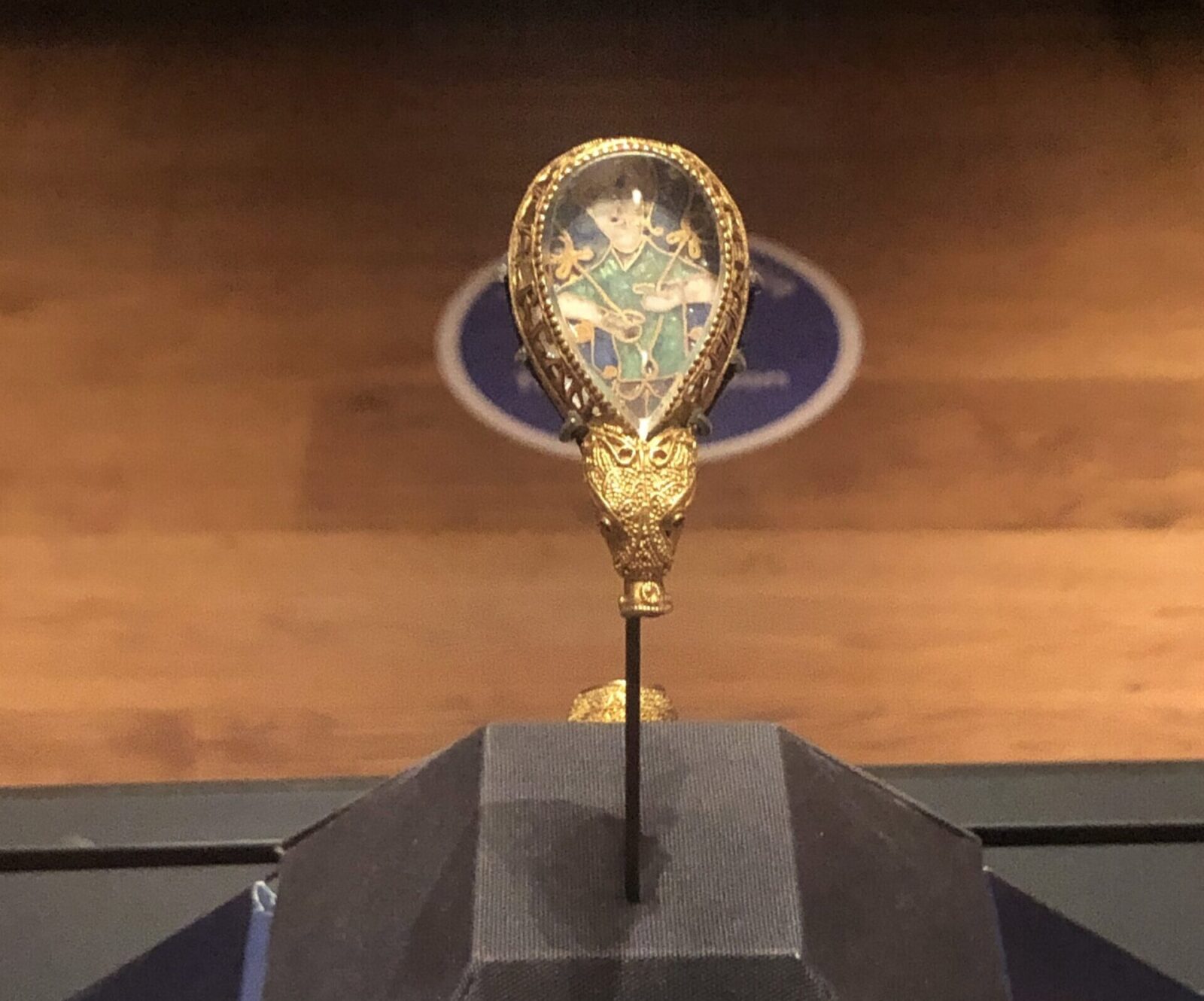
Fine arts offerings I enjoyed included classical Greek and Roman sculptures, historical musical instruments, European and Asian courtly art objects, and a delightful selection of contemporary kabuki theatre kimonos (since taken off view). There are western paintings from the Renaissance through Modernism, but some of these galleries were closed for a wedding. For me, however, the highlight of this museum was the 9th century CE masterpiece known as the Alfred Jewel. A small, teardrop-shaped object made of gold, rock crystal, and colorful enamel, the Alfred Jewel depicts a single figure who could be allegorical or religious. Its gold band includes both an animal head and an inscription that may tie it to the famous Anglo-Saxon King Alfred the Great. It’s a masterpiece of early medieval art, and I was really excited to see it in person. Find it in the medieval England 400-1600 gallery, where it has its own display case in a place of prominence.
The Ashmolean Museum is big and has lots to offer. You could probably spend a whole day here, but that’s challenging if you actually want to see anything else at Oxford.
Official website: The Ashmolean Museum
Planning Your Visits
All the museums mentioned here are free to visit the permanent collection but charge admission for the larger special exhibitions. I didn’t attend any ticketed exhibitions during my time in the UK (as a first-time visitor to these museums, I felt that I already had plenty to see), but I did observe that several of the popular ones were selling out and required reservations well in advance. V&A special exhibitions seem to be particularly well attended.
Most museums ask for a donation (usually around £5-10 per visitor), but it’s totally optional and not at all tied to admission. The donation ask comes in unmanned stations around the lobby where you can drop cash or sometimes also donate digitally. Additionally, museums tend to ask for a donation in exchange for a printed map or guidebook, though you can always access the digital map for free online. The British Museum offers a small printed guide to the collections at a cost of £6 (not a donation; you have to pay the attendant, and I found it to be helpful and worth the price.
A note of caution
I heard some stuff about pickpockets operating within UK museums, especially in London. I didn’t have any problems myself, possibly thanks to my new anti-theft Travelon bag, but this is something to remain aware of, especially when using your phone inside the museum.
On the subject of safety, I just want to remind you that I’m far from an expert in this city, so you’ll have to do your own due diligence if you want to visit. Since the safety landscape everywhere on earth is constantly subject to change (especially recently), it is important to stay informed about the ongoing conditions wherever you want to visit and exercise reasonable precautions while you’re there.