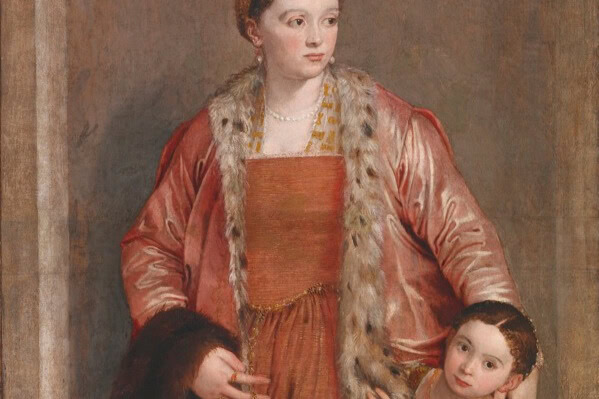
Featured image: Paolo Veronese, Portrait of Countess Livia da Porto Thiene and her Daughter Deidamia (detail), 1552. The Walters Art Museum, Baltimore.
Have you ever wondered about artistic taste – what it is, whether you have it, and what yours looks like? Do you want to make it easier to figure out which artworks you’ll probably enjoy? Or are you looking for tips on expanding your horizons?
If you enjoy this post, also check out my book, The Art Museum Insider.
Author’s note: “Discover Your Artistic Taste” used to be a three-part series, but all the content is now here in a singe post.
What is artistic taste?
There are several different ways we could define artistic taste, but today, we’re talking about the simplest – your own individual preferences. You can think of it like preferences in food. If you love peanut butter and hate pizza, that’s your taste and thus is totally valid, even if others don’t feel the same way.
Having some kind of visual taste is a natural and automatic part of seeing things. Even if you think you have no taste, you’ll see two paintings and prefer one to the other, even if you don’t know why. If you’ve ever had two different posters and chose one to hang on your wall, you’ve already demonstrated some degree of visual taste.
The word “taste” often implies judgment when defined other ways. When people talk about taste, they often mean someone’s ability to recognize and prefer supposedly-superior options over inferior ones. But that’s not what we’re talking about here. We’re simply referring to personal preferences, not value judgements. And whatever your taste is, it’s totally valid.
Why care?
If artistic taste is personal and automatic, and it doesn’t involve learning to recognize “superior” art, what’s there to talk about? For one thing, just because we all have innate taste doesn’t mean we’re consciously aware of it. Discovering your taste can be fun and interesting, give you some personal insights, and help you to find more art you’re likely to enjoy.
Secondly, it’s nice to challenge and develop your taste. This doesn’t mean changing your preferences, but rather expanding your horizons, discovering additional favorites, and learning more about what you already enjoy. Taste rarely stays static over time. Mine has changed so much in the time that I’ve been an art historian, mostly expanding as I’ve learned more about different types of art. It’s very rare for me to completely cease liking something I once enjoyed.
All that said, the goal is never to feel any particular way about any particular artwork, even one that other people tend to have strong opinions on.
Food for thought, part one
- What does “taste” mean to you?
- If someone asked you, right now, what your favorite kind of art is, what would you say?
How to identify your artistic taste
The best way to recognize your artistic taste is simply paying attention to your responses to different types of art. Although you can do this in many formats, it’s great in a museum where you can see lots of examples in person within a relatively short period of time. It doesn’t happen instantly, though, so don’t expect to fully discover your taste within a single visit.
Start becoming aware of what art appeals to and attracts you – which works are your favorites, which you enjoy the most or find particularly memorable. Which are you generally most eager to see during a museum visit?
Look for similarities and trends within this group you’ve identified. At first, you might think about this in purely visual terms (color, line, etc.). I’ve always been intrigued by the idea that certain formal qualities, like bright colors, bold lines, or soft brushwork, might appeal to us especially strongly. You can also think about subject matter, mood, theme, and even external associations. For example, you might find yourself drawn to cheerful artworks, romantic artworks, art that seems exotic to you, or even the kinds of artworks you remember seeing when you were a kid.
If you’ve gotten this far, you’ve already achieved something great! Any ideas you can gather about the qualities you enjoy in artworks will make it much easier to find additional works you’ll likely love.
Going a little deeper
Once some patterns emerge, think about what qualities within them resonate with you. Notice how art affects you psychologically and emotionally. Try to identify the things that draw you in and the emotions you derive from them. However, I think that most people have more than one aesthetic they enjoy. Your taste doesn’t have to fit neatly into a single box, and it can definitely include contradictions. Remember, there are no right or wrong answers here. You can also think about what separates the artworks you prefer from those you’d rather skip. Are there any recurring themes?
Then, of course, you can start to ask yourself why all of that might be. This is where the self-discovery part comes in. It’s really subjective, so I encourage you to take it lightly. How does your taste in art relate to your personality, interests, or taste in things like books or movies? For example, if you are a cheerful person, is your favorite art also really sunny, or do you have a taste for something a little bit dark and mysterious? Perhaps you have a preference for art from countries you’ve visited or historical periods you find particularly interesting. Does your taste seem to vary based on your mood or other factors? (I think we all gravitate to different art when we feel troubled versus when we feel serene, for example.) On the other hand, don’t worry if you can’t draw clear parallels between your artistic preferences and other aspects of your life.
Food for thought, part two
- Which artworks would you consider your favorites? Which types of art do you most look forward to seeing or think the most about afterwards?
- What aesthetics or other qualities do your favorite artworks typically have in common?
- Does your taste in art have anything in common with your taste in things books, movies, TV, fashion, and design?
Expanding your taste
Once you start to recognize what you already enjoy, experiment with expanding your horizons and trying new kinds of art. Think of this as giving yourself the opportunity to meet new artistic friends. Personally, I never actively try to make myself like any particular art, but I’m always genuinely pleased when I find myself enjoying something I didn’t before. It’s like going to a restaurant, trying an unfamiliar dish, and realizing you love it.
The best way to do this is simply to seek out types of art that you haven’t explored or given much thought before. Familiarity plays an important role in all kinds of taste, so spend some quality time with unfamiliar art and see what happens. Do you find a new appreciation for it, or at least new insights? Can you imagine what might attract some people to this art, even if it’s not your favorite personally? Even if your opinion doesn’t change, you’ll probably still gain something from the experience.
A little knowledge goes a long way
Learning more about art very often changes our perspective on it as we discover all its fascinating meanings, nuances, and connotations. Plus, it just becomes that much more familiar to us. I’ve developed a real appreciation for so many art styles I didn’t used to enjoy because I learned something about them and saw them in a richer and more familiar way. This makes it worth doing a little studying both to befriend unfamiliar art and to gain an even fuller appreciation of art you already love.
You can also see familiar art with fresh eyes through something as simple as going to a museum with a friend who has different taste or visiting an exhibition that puts art you thought you knew in a totally different context.
Food for thought, part three
- How does familiarity impact your artistic taste? Does spending more time with an artwork or type of art change how you feel about it?
- How does knowledge impact your taste?
- Are there artworks or kinds of art you like now that you didn’t in the past?
- Has there ever been a situation where your perspective on some art shifted substantially? If so, why?
I really hope you’ve enjoyed learning about artistic taste and have started to discover your own!
A simplified version of this exercise appears in my book The Art Museum Insider. So, if you liked this post, check out that book to get more tips, activities, ideas, and approaches to help you make sense of artworks wherever your encounter them.